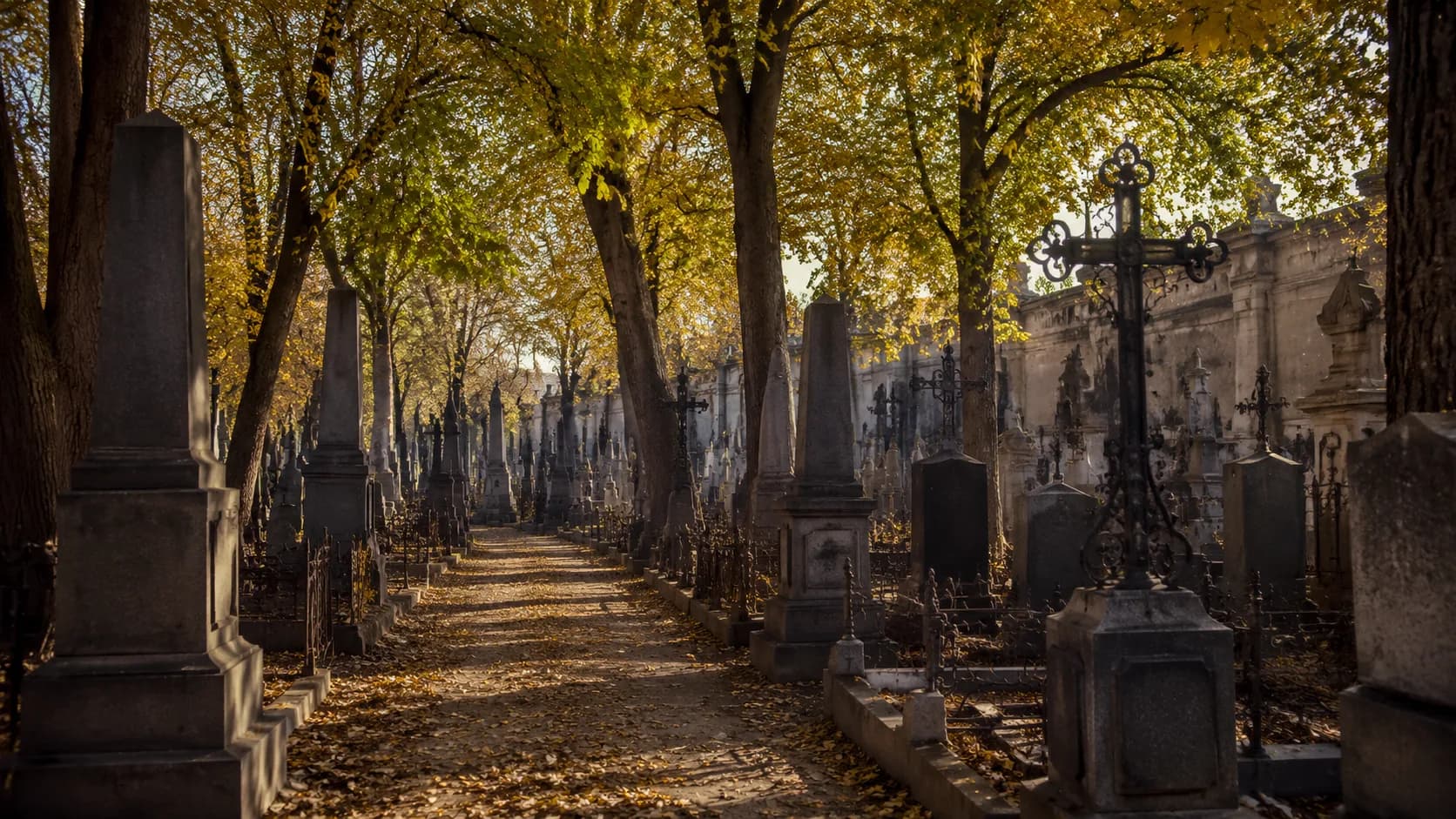
The Botkin Cemetery is the oldest functioning cemetery in Tashkent, founded in 1872 shortly after the Russian Empire's capture of Tashkent (1865). The site holds three and a half generations of Russian settlers, Soviet-era residents of all nationalities, and later city dwellers. This is the navigational guide to the most historically dense point of remembrance in the city.
Location and transport. Botkin lies on both sides of Botkin Street in central Tashkent. City buses 1, 16, 18, 21, 30, 44, 80 and 96 stop at Mirzo Ulugbek Avenue. Taxi from anywhere in the city: 5–15 minutes.
Historical layers. Three overlapping layers. Imperial (1872–1917): the oldest section to the south, with Russian-classical-style granite and marble headstones; many were high officials of the Turkestan governorate-general, engineers, doctors. Soviet (1920–1991): the majority of the cemetery; includes the 1930s repression evacuees and WWII evacuated families plus Soviet-era leadership. Post-Soviet (1991–present): northern sections and infill, ceramic-portrait monuments.
Ashkenazi Jewish section. One of the most historically valuable plots. Concentrated in the southern area along Botkin Street. Includes 1930s–1940s burials of Jews evacuated from western USSR republics (Belarus, Ukraine, Lithuania, Latvia) during the Stalinist repressions and WWII. Many headstones with bilingual Hebrew–Russian inscriptions.
Military hospital sector. Over 40 evacuation hospitals operated in Tashkent in 1941–1945. Soldiers who died in them were buried in the special «military» sector of Botkin. Some are individual graves, others mass; names are on a memorial wall.
Archives and search. The Botkin administration maintains a registration book; handwritten through the 2010s, partially digitized now. Requests filed in person, by power-of-attorney or via a contractor. Turnaround 5–15 working days.
Care state. Good on main paths, variable on periphery. Plots with named markers and photographs get more regular care. Old stones without markers weather; restoration is a separate service.
What we do at Botkin. Grave search with photos, video and a GPS point. Subscriptions (12–48 visits/year). Old-stone restoration (quoted from photos of the plot). Hakamat HaMatzevah for Jewish families (we coordinate with the Tashkent Chevra Kadisha). Sorokoust and panikhidas (through three Orthodox parishes in Tashkent).
Adjacent points of interest. Botkin Street 8 — main gate. North — district Ts-1. Southeast — Chigatay (separate Muslim cemetery, separate article). Across the road — Textile Jewish (separate article).
Frequently asked questions
Yes. We find the grave and send photos, video and a GPS point. Timelines: online stage 2–5 days, site visit 3–10 days; the cost depends on the data you have — we quote after reviewing it.
Limited — only into existing family plots or relative-extension burials. There are no free plots; new burials go to Domabad or Chigatay.
Topics in this guide
- Domabad Cemetery in Tashkent: 165 hectares, 450,000 gravesThe largest cemetery in Tashkent and one of the largest in Central Asia: history, sectors, how to find a grave, why GPS coordinates are mandatory.
- Tashkent Textile Jewish Cemetery: 8 sectors, 16,300 gravesTashkent's main Jewish cemetery for the Soviet and post-Soviet eras: 8 sectors (6 Jewish, 2 Russian), 16,300 burials. Structure, access, what we offer.
- Bukhara Jewish Cemetery: how to get thereQuick guide: how to access, sectors, maintenance state. The full story is in our guide to Bukharian Jewish cemeteries.
- Cemeteries of Samarkand: Jewish, Russian, ArmenianGuide to the main cemeteries of Samarkand: Mahalla Yahudi (Jewish), Shah-i-Zinda (historic Muslim complex), Russian, Polish, Armenian — where which traditions rest.
- Cemeteries of Fergana and Andijan: list and notesWhat's in Fergana, Andijan, Kokand, Margilan — the main Muslim, Russian and Jewish cemeteries of the valley.
- Cemeteries of Nukus and Karakalpakia: regional specificsKarakalpak burial customs, the main cemeteries of Nukus and Mo'ynoq, regional notes against the backdrop of the Aral Sea disappearance.
- Chigatay — the main Muslim cemetery of TashkentChigatay in Tashkent — the oldest Muslim cemetery, active from the 15th century. History, sectors, how search and care work today.
- The Polish cemetery in Samarkand: history and surviving familiesThe Polish diaspora of Samarkand: 19th-century exiles, the Anders' Army, the descendants. Where graves are found, how to maintain them, what documents matter.
- The Armenian cemetery in Tashkent: history after the 1915 resettlementThe Armenian section in Tashkent: 19th-century exiles, refugees of the 1915 Genocide, Soviet-era and post-Soviet Armenian families. Where to find and how to maintain.
- Cemeteries of Tashkent: list, rules and how we workMajor Tashkent cemeteries, opening hours and visiting rules. Where to go for care and design — and how we coordinate the work.
Related topics
In the cemetery registry
Need help or a detailed estimate?
We're available 24/7. Leave a request — we'll call back and clarify.