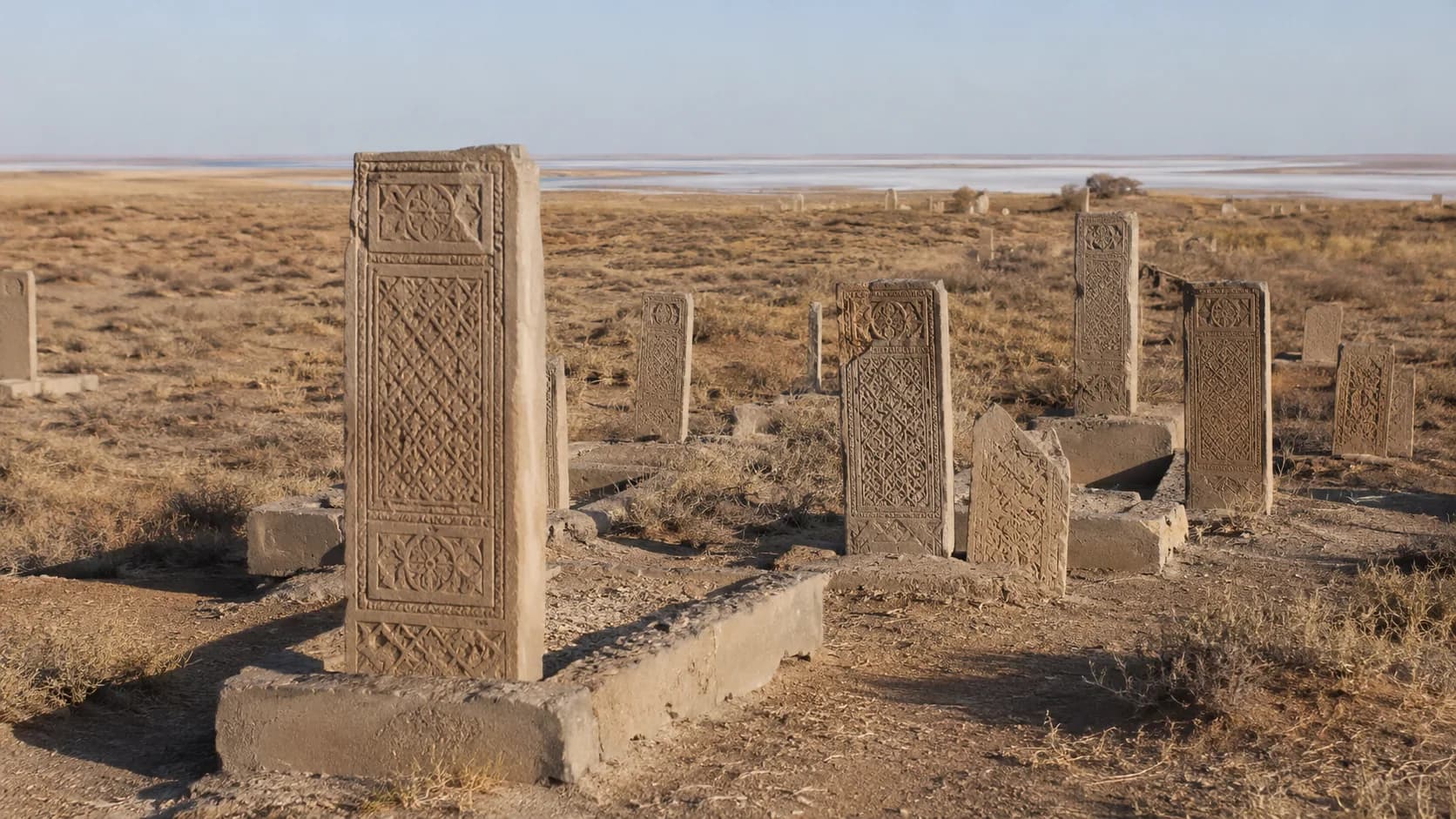
Karakalpakstan is a separate autonomous republic in western Uzbekistan with its own ethnic tradition (Karakalpaks — a Turkic people related to Kazakhs, but not identical to Uzbeks). The region has a distinct burial style and more complex logistics.
Karakalpak Muslim customs. Similar to Uzbek but with several differences. The traditional headstone is flat and recumbent, not vertical — a steppe-culture trait. Ornament is geometric, sometimes with floral elements; rarely with a crescent. Names and dates in Karakalpak (Latin script since the 1990s; Cyrillic before).
Main Nukus cemeteries. Principal Muslim — southern outskirts. Small Russian — Dustlik Street; in use from the 1950s. Very small Jewish — essentially preserved after total emigration of the Karakalpak Jewish community in the 1990s.
Mo'ynoq and Aral-side villages. After the Aral Sea desiccation (1960s–2010s) many villages were abandoned or sharply shrank. Old Mo'ynoq cemeteries are partially preserved — some covered by sand; restoration is a separate task, expensive and not always successful.
Khorezm region (adjacent). Urgench and Khiva have their own Muslim, Russian and small Jewish cemeteries. Logistics similar to Nukus.
Search. Archives handwritten, minimal digitization (10–20%). Many data unidentified due to the Latin-Cyrillic script change of 1992–1995 (names in multiple variants across documents). 10–25 working days.
What we do. Search (10–25 days). Subscriptions (typically 4–6/year). Flat Karakalpak stone restoration — region-specific; we know two masters in Nukus. Documentation for diaspora families (preserving coordinates matters against repeat sand burial).
Frequently asked questions
Sometimes — if coordinates are preserved and sand hasn't fully covered the site. Clearing $300–800, inscription restoration extra $200–500. No guarantees.