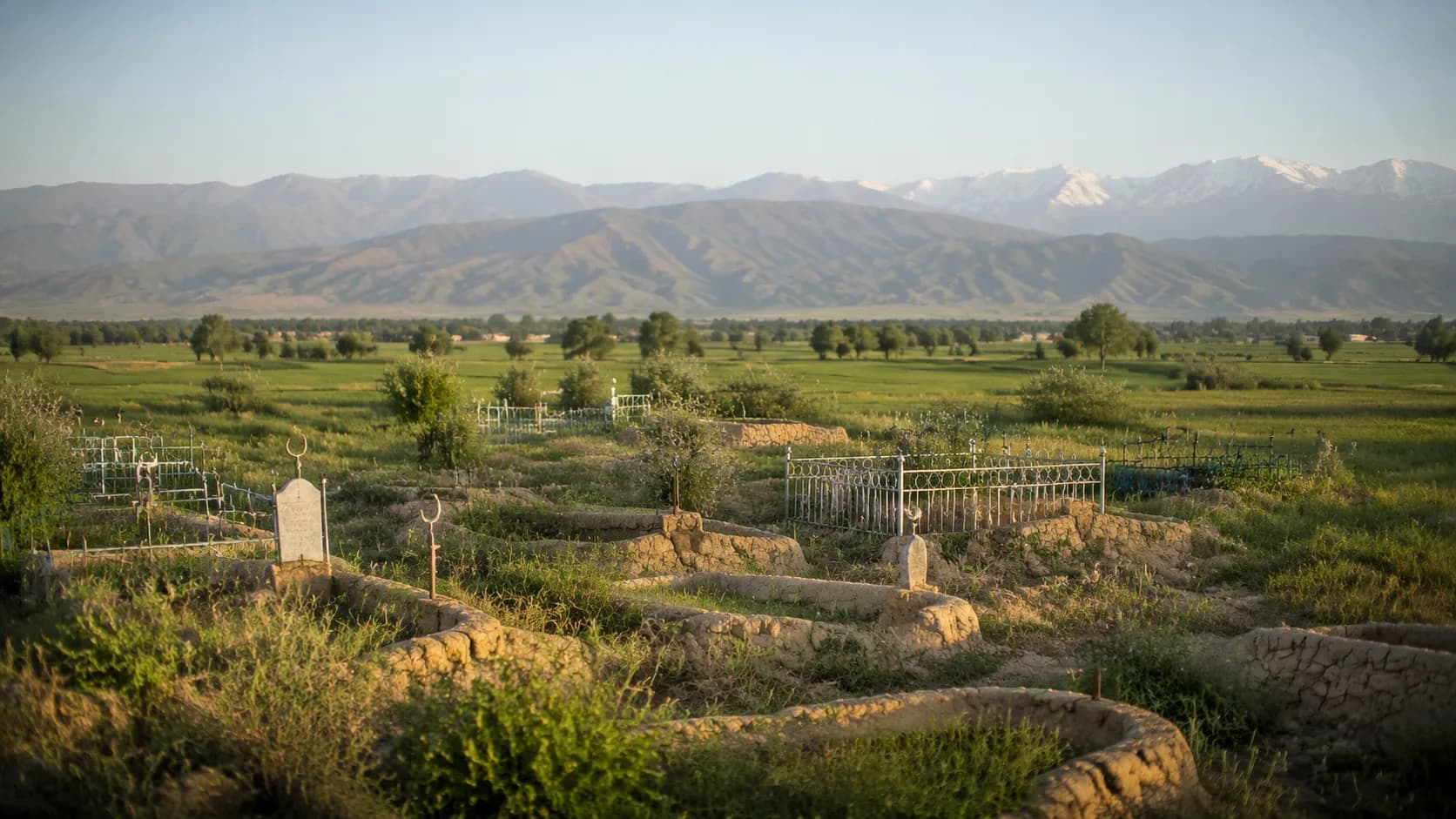
The Fergana Valley is Uzbekistan's most densely populated region. Each major city — Fergana, Andijan, Kokand, Margilan, Namangan — has several independent cemeteries. This is the quick reference.
Fergana. Main Muslim — eastern outskirts. Russian — by the Alexander Nevsky church, open since the 1880s. Small Jewish — next to the Russian. Armenian — family plots in the Russian.
Andijan. Two main Muslim cemeteries (North and South). Russian — by the railway station, medium size. Small Jewish, mostly closed after the 1990s emigration.
Kokand. Main Muslim by the Khudayar Khan fortress. Jewish — active since the Khanate era (pre-Soviet layer), historically significant; ~500 graves, supported by diaspora community organizations. Russian — by the St Nikolas church.
Margilan. Main Muslim — western outskirts. Old Jewish — small, ~200 graves, no active community now; care possible only via private contractor.
Namangan. Two Muslim cemeteries. Small Russian; very small Jewish, essentially preserved.
Search in the valley. Archives handwritten, partial digitization 2015–2020 (30–50%). Replies 7–14 working days. For Bukharian Jewish ancestors in Kokand, ~60–70% success; other valley cities ~50%.
What we do. Search (7–14 days). Subscriptions (often 4–6/year for smaller cemeteries). Restoration (especially for Jewish plots without community upkeep). Family lineages in the valley often span multiple cemeteries.
Frequently asked questions
Rural cemeteries have no formal archive; search via mahalla elders and physical walking. Success ~40–60%, 10–20 days.