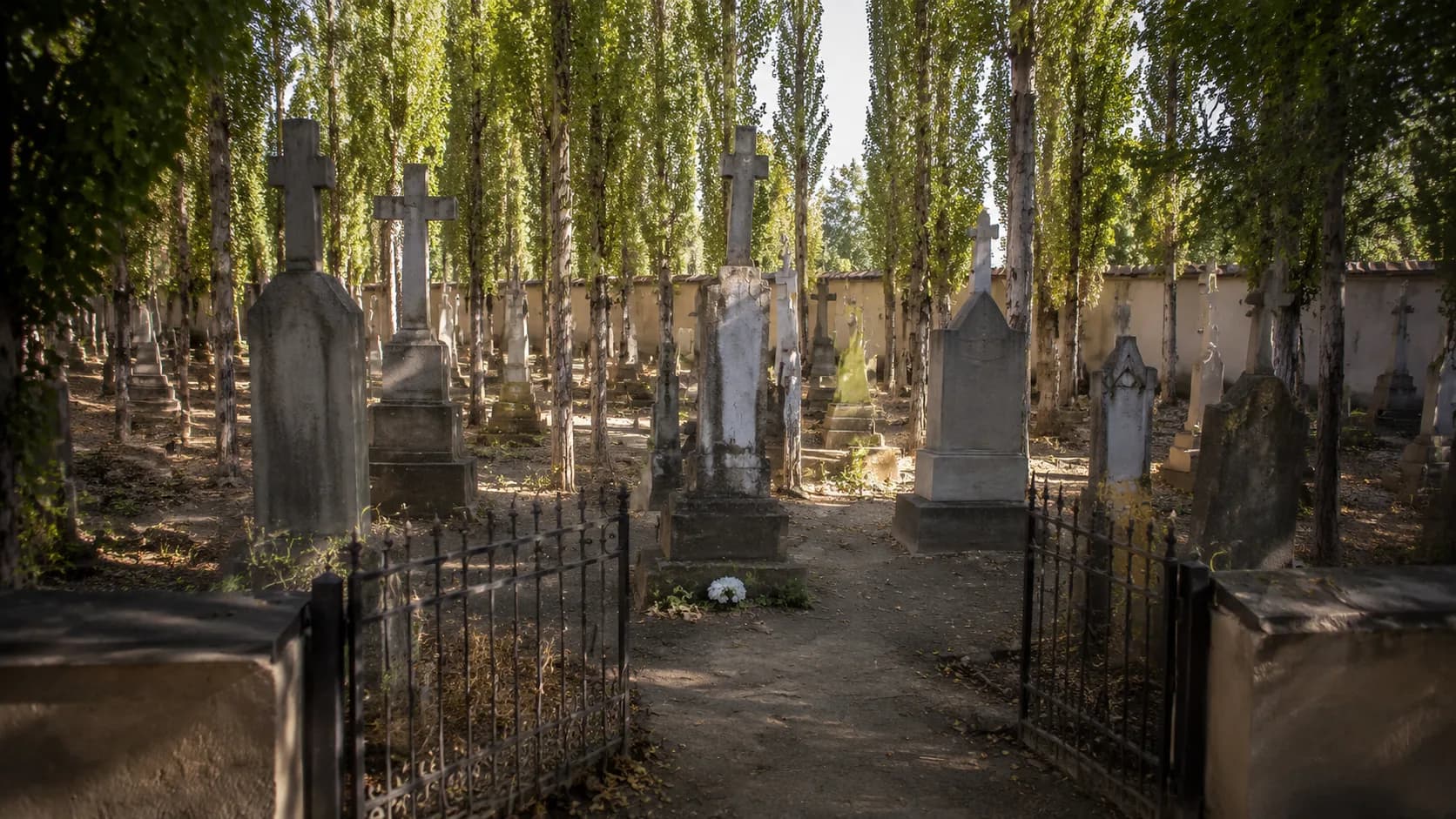
The Polish cemetery in Samarkand is one of the most moving sites of Polish diaspora memory in Central Asia. It holds 19th-century exiles and Anders' Army evacuees (1942–1943) who could not move on to Iran and were buried in Uzbekistan.
Historical layout. Old sector (1860–1917): Polish exiles of the 19th century, mostly after the 1863 uprisings and other anti-Russian activities. The Russian Turkestan served as a «soft» Siberia — exile without total cultural rupture. Middle (1918–1945): inter-war Polish refugees and Anders' Army evacuees (1942–1943); many died in Samarkand evacuation hospitals. Modern (1945–present): descendants of Polish families who remained in Uzbekistan post-war.
Address. Northwest outskirts of Samarkand, by the Catholic Church of St. John the Baptist. City buses 5, 17 to the church stop.
Size. 300–400 burials. Smaller than the Jewish cemetery but emotionally rich. Most monuments are simple granite or stone crosses; some wooden (restored).
Main annual date: November 1 (Wszystkich Świętych). By evening the cemetery becomes a sea of candles; Poles, local Russians, and sometimes Uzbek friends of families all come. See C1 spoke on Polish Catholic customs.
Maintenance. Partially supported by the Polish consulate in Tashkent, partially by the local Catholic parish, partially by descendants in the diaspora (Poland, Canada, US, Germany). Good on central paths; periphery variable.
What we do. Search (5–10 days). Subscriptions 3–6/year — typical for Polish diaspora (November 1 + anniversary + some saint days). Mass coordination with the Polish Catholic parish. Restoration of old wooden crosses and 19th-century stelae — specialty service with a conservation specialist.
Documents. For families in Poland/Canada/Germany, the standard pack (passport, proof of relation) is sufficient. Restoration sometimes needs coordination with the Polish consulate or the Catholic parish — we usually handle this.
Frequently asked questions
Often yes, with name and approximate year (1942–1943). The Polish consulate and the Institute of National Remembrance (IPN) have partial archives. ~65–75% success.