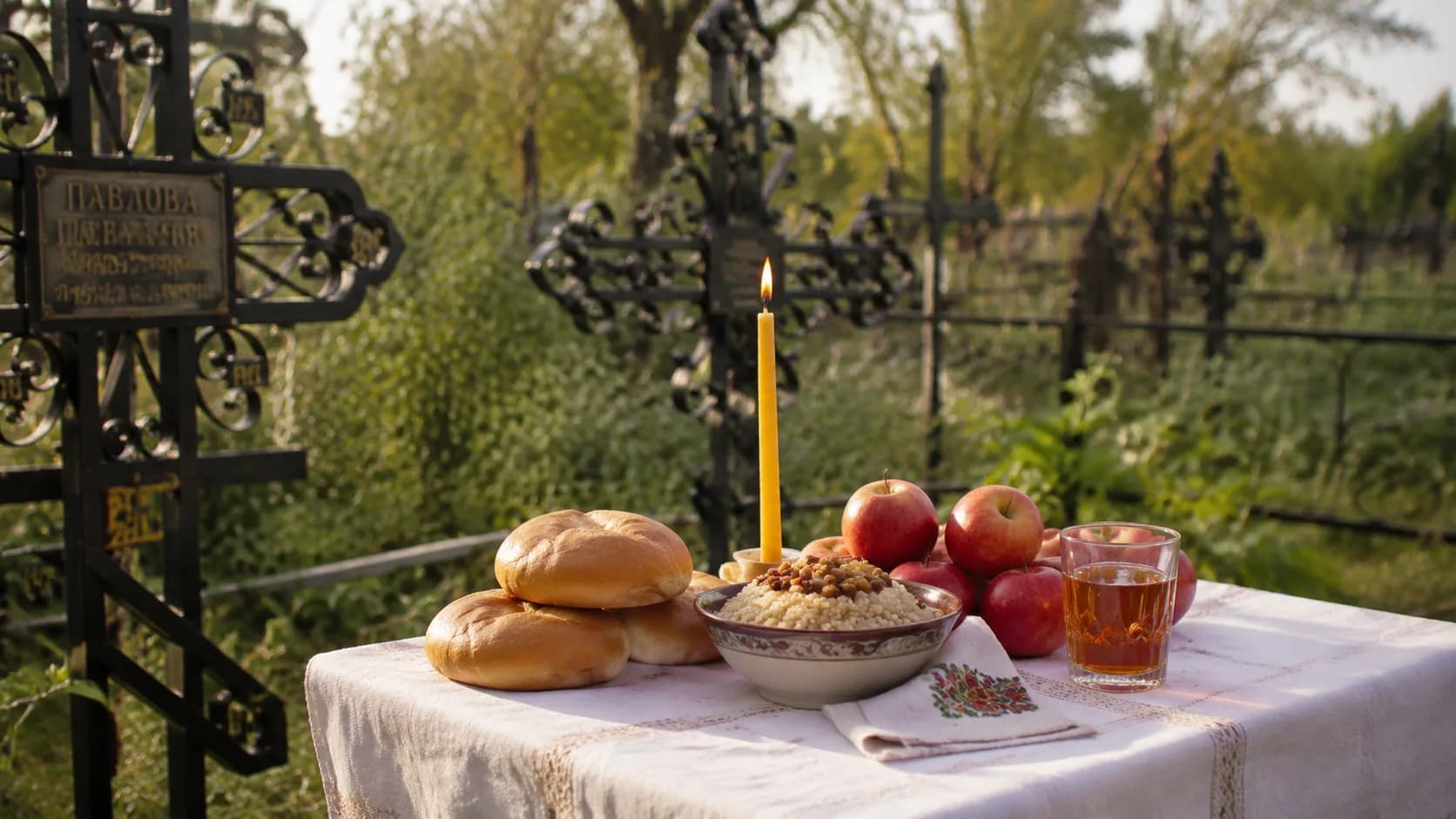
The Orthodox community in Uzbekistan goes back to the Russian Empire's 19th-century expansion; the largest Orthodox cemetery is Botkin in Tashkent, founded in 1872. The Orthodox commemoration calendar is strict and well-documented, which makes it the easiest of the major Uzbek traditions to plan remotely.
The early days are 3, 9 and 40 after death. The 40th day is the most important early point — according to church teaching, the soul finally settles into its afterlife on that day. Sorokoust, the 40-day prayer commemoration, is ordered in any Orthodox church and can be paid online by diaspora families.
There are seven parental Saturdays a year, plus Radonitsa — the only Tuesday of the lot, falling after Easter Week. Radonitsa is the day to visit the grave with Easter kutya, uzvar, pasha and kulich. The other Saturdays — Meatfare, Trinity, Demetrius, and three during Great Lent — anchor the rest of the calendar.
Care of the plot. Orthodox tradition allows fenced plots, planted shrubs, benches and tables — much more elaborate than the Muslim canon. Maintenance is correspondingly more intensive: flowers, swept paths, a tidy area for the memorial meal. We sync visit schedules to the Orthodox calendar — 40-day, parental Saturdays, Radonitsa, anniversary — automatically once the date of death is known.
Frequently asked questions
Yes. Many Orthodox churches in Russia, Uzbekistan and Greece accept online orders and payment. We have a dedicated spoke article with links and step-by-step instructions.
Yes, and it's the most visited day of the year. At Botkin in Tashkent and the Samarkand Orthodox cemetery there are crowds; we avoid scheduling remote work on Radonitsa to stay out of the way.