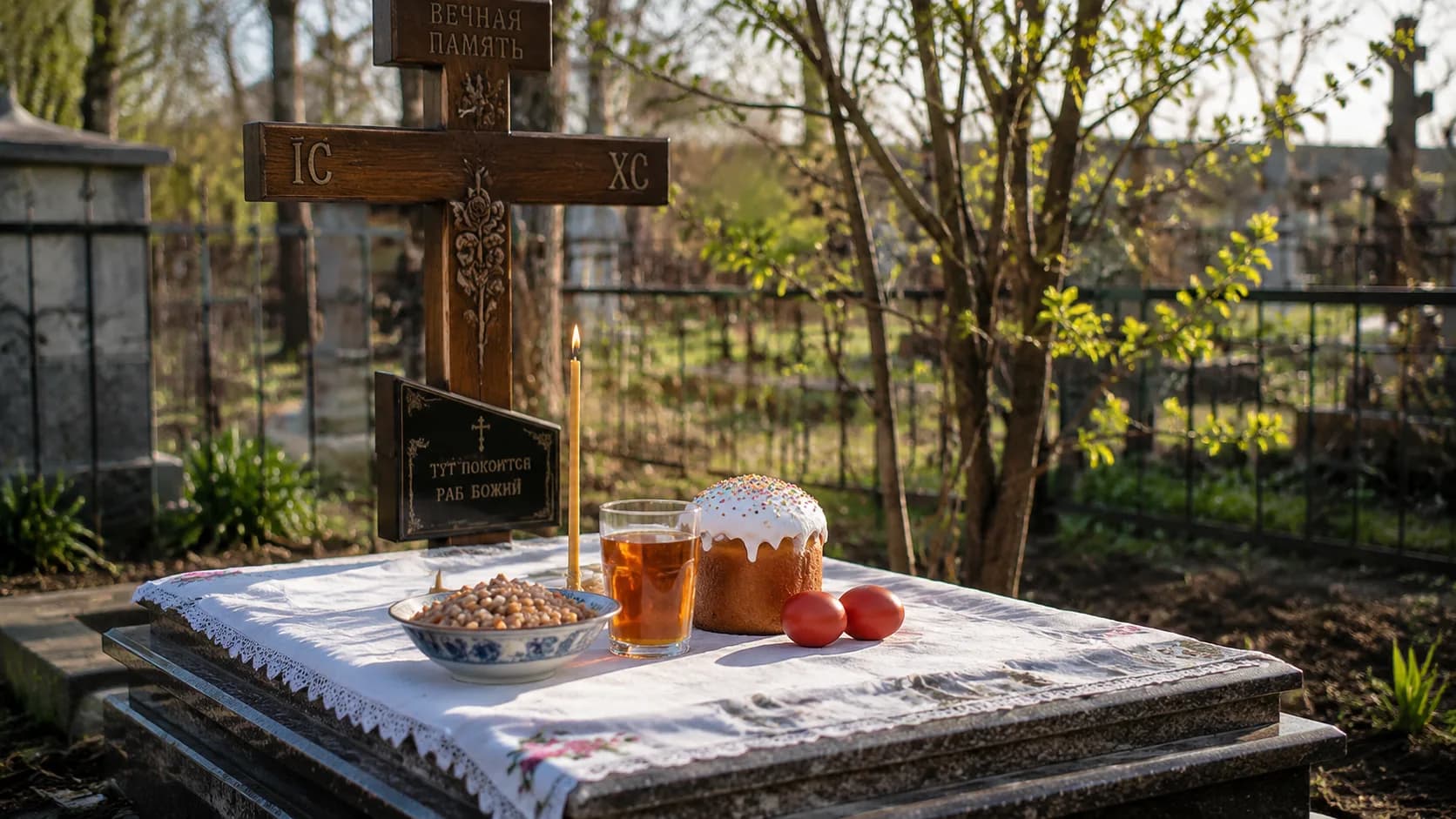
Radonitsa is the Easter-season memorial day in the Orthodox tradition — the only commemoration day that falls on a Tuesday rather than a Saturday: the Tuesday of the second week after Easter (Thomas Sunday). In 2026 Radonitsa falls on April 21.
Why «radonitsa». The word comes from «радость» (joy) — paschal joy shared with the deceased. The tone is bright, not mournful — distinct from other parental days.
What to bring to the grave. Paschal foods: kulich, dyed eggs, pasha (curd). Kutya (boiled grain with honey and raisins), uzvar. Fresh flowers (even number). A beeswax candle.
At the grave. Tidy up; light the candle; place foods on a clean white cloth (not on bare ground); recite the Lord's Prayer; if you know them, the paschal tropar and a memorial prayer. Brief stay — 15–30 minutes.
Avoid. Drinking alcohol at the grave (tradition rather than rule, but the church discourages it). Leaving food at the grave — usually removed (in older times for the needy; today receivers don't operate).
From abroad. We organize a Radonitsa visit on April 21, 2026: tidy-up, paschal foods (kutya, symbolic kulich, candle), photo report. Included in 12+/year subscriptions; standalone ~$80–120.
Coordination with home. Parallel: light a candle at home, recite Lord's Prayer. In the US, the parish will hold a panikhida — attend the morning service. Our Tashkent visit is scheduled for the Tashkent morning (= US night or European early morning); the report arrives at the start of your day.
Radonitsa is one of the most-visited cemetery days of the year. On the Tashkent Botkin and Samarkand Orthodox cemeteries there's a crowd; we don't schedule unrelated remote work on this day. The Radonitsa-specific visit is separate, morning-only.
Frequently asked questions
Yes, it's tied to Easter (the Tuesday of the second week after Easter). 2026: April 21. 2027: April 13. 2028: April 25.