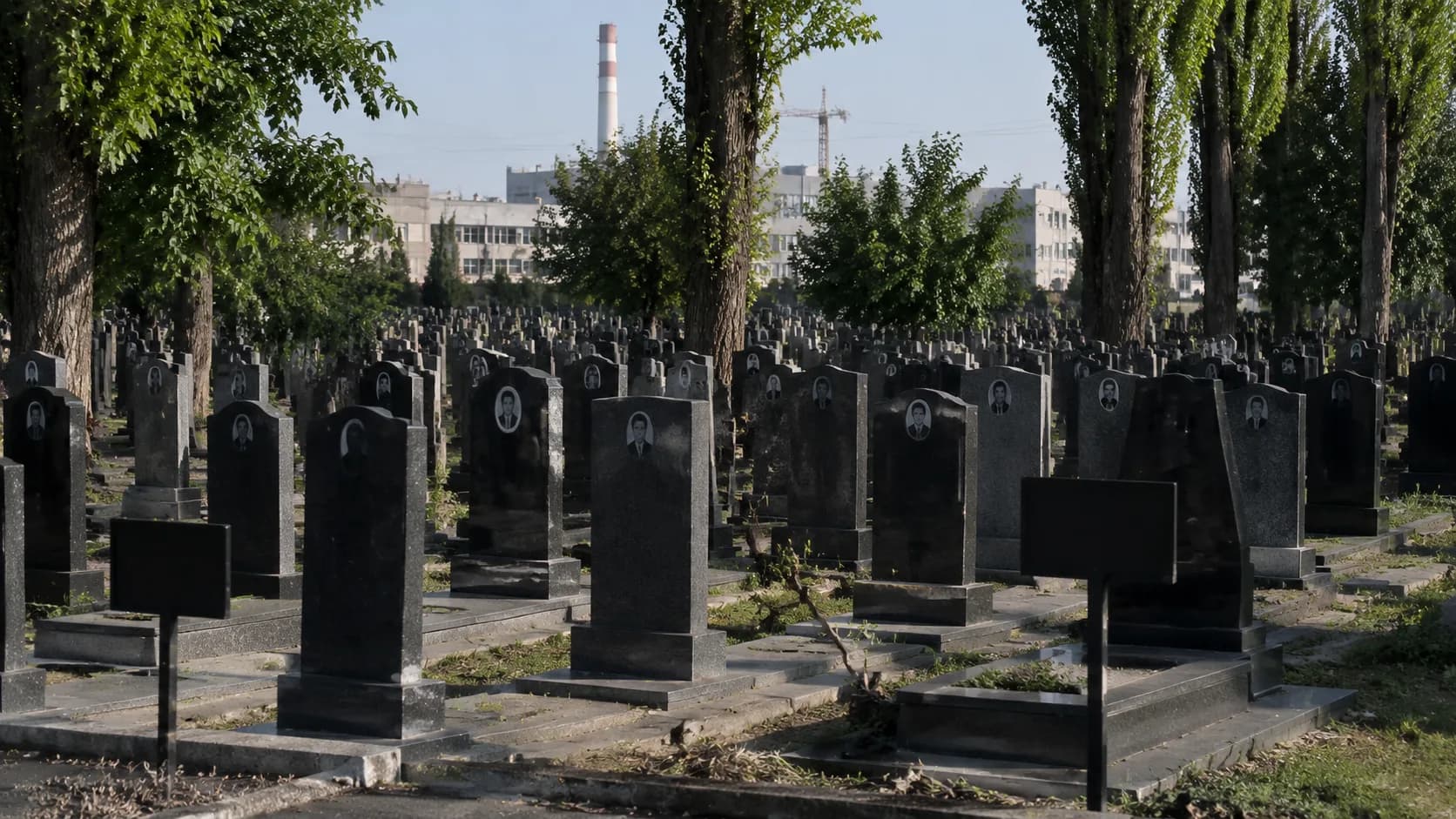
The Tashkent Textile cemetery (also called the «European Jewish cemetery» colloquially) sits next to the historic Textile Factory in central Tashkent. Total: about 16 300 graves across 8 sectors — 6 Jewish, 2 Russian. For Bukharian families who relocated to the capital during the Soviet period — and that's a large fraction of the community — this is the most likely cemetery to search.
Sectors. Numbered 1 through 8. Sector 1 contains the oldest burials (late 1920s onwards). Sectors 2–4 are Soviet-period Jewish (mostly Ashkenazi evacuees + earlier Bukharian arrivals). Sectors 5–6 are post-Soviet (1990s-present, predominantly Bukharian). Sectors 7–8 are Russian, separated by a low wall.
Notable inhabitants. Several well-known Bukharian rabbinic families, Soviet-era Jewish writers, evacuated Ashkenazi families from Belarus and Ukraine (1930s repressions + WWII), and post-1990 community leaders who chose to remain in Uzbekistan.
Archive. The cemetery administration maintains a paper register; partial digitization has happened in the past five years. Sector + row + grave number is the standard reference. For diaspora search, we can resolve about 80% of cases within 5 working days.
Style of headstones. Soviet-era stones are typically grey marble or limestone with bilingual Hebrew + Russian inscriptions. Post-Soviet are often black Indian granite with ceramic photo-plates and a small Star of David element — the same Bukharian style as in Bukhara and Samarkand.
Visiting protocols. Open daily 8:00–18:00. Free entry. The gate at the south accepts visitors; the northern (employee) gate is closed. Bring head covering for men. Place stones rather than flowers per tradition.
What we do here. Standard search 3–5 days. Yahrzeit visits with photo and Tehillim recitation. Monument cleaning. Full Hakamat HaMatzevah. We have a working relationship with the cemetery administration that streamlines all this.
Frequently asked questions
Yes, but the oldest stones are heavily weathered; success rate ~60% versus 80% for newer sectors. We supplement archive search with on-site walking.