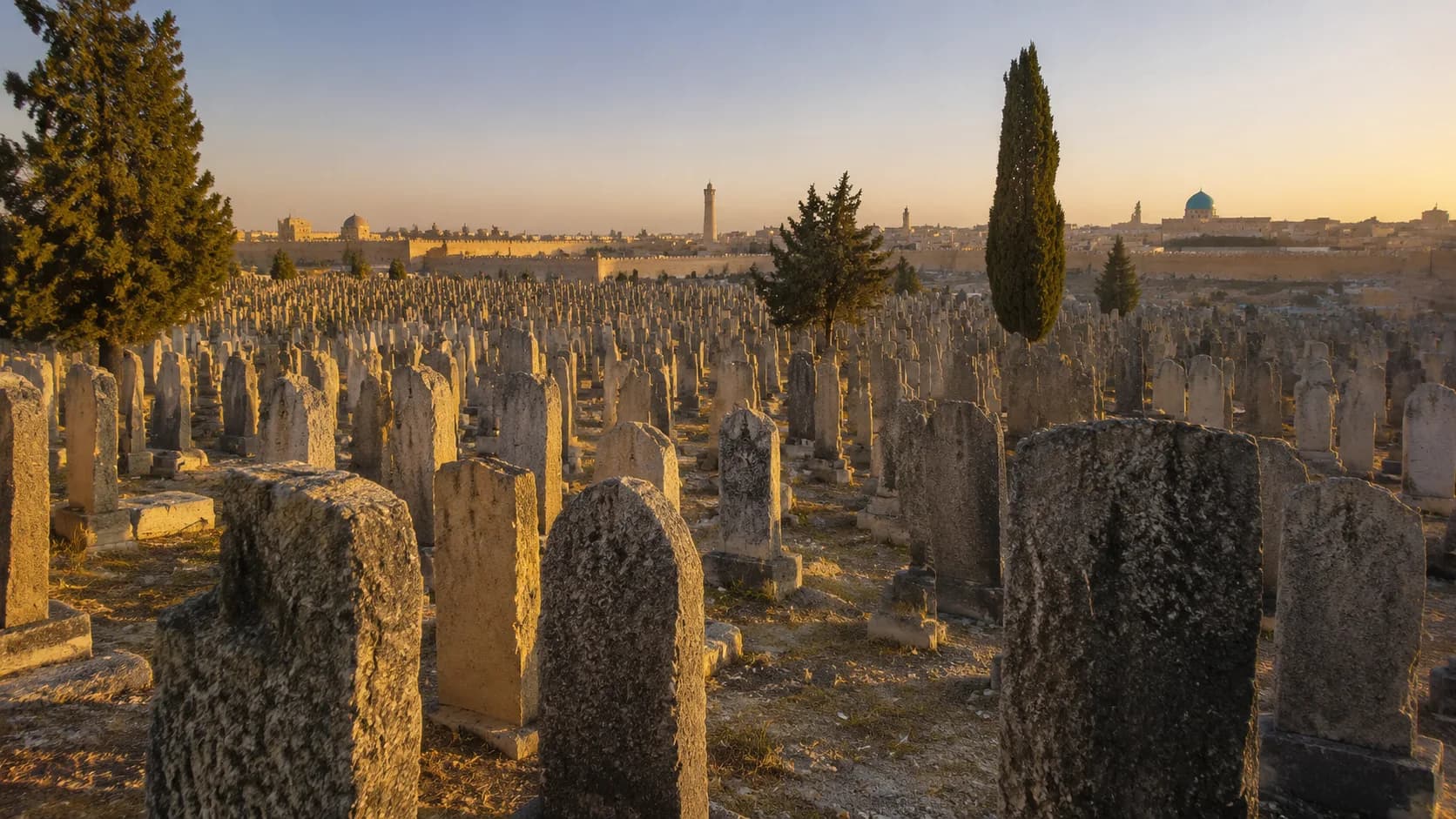
The Old Bukhara Jewish Cemetery is the heart of the Bukharian Jewish community's collective memory. About 10 000 graves spread over roughly 32 hectares (≈80 acres) at the western end of Ibrokhim Muminov Street, reachable by city buses 6, 33, 75, 76, 86 and 88 to the «Yoshlar Markazi» stop. The cemetery is gated and walled; the keeper's gatehouse is at the southern entrance.
History. The oldest identifiable graves date to the 17th century, although the community's presence in Bukhara is at least 2 500 years old. The cemetery was continuously used through the Soviet period; many of the headstones from the Soviet era are funded by relatives in the diaspora after emigration. The newer stones at the eastern edge (the past 30 years) bear Hebrew + Russian dual inscriptions and ceramic photo-plates — a Bukharian post-Soviet style.
Sectors. Informally divided into older (western) and newer (eastern) zones, with several rabbinic family plots clustered near the southern wall. The Bukhara Fund maintains a hand-drawn index of named plots but it isn't fully digitized; for a quick search we typically need to walk a sector.
How to find a grave here. If you know the approximate decade and family name, our standard search package can usually locate it in 3–7 days. For pre-Soviet ancestors (mid‑19th century or earlier) the success rate is lower (around 50%) because many older stones are weathered and the indices are imperfect.
Maintenance status. Excellent. The Bukhara Fund (a diaspora‑funded organization) employs full‑time caretakers; the site is swept, weeded and watered weekly. This is why the Bukhara cemetery looks better cared‑for than its dwindling local community would suggest.
Visiting protocols. The cemetery is open daily during daylight hours; no entry fee. Men should cover their heads (a kippah or a hat). Women are welcome (Bukharian practice, unlike the strict Ashkenazi minhag of some communities). Small stones may be picked up and placed on graves as memorial markers — this is the traditional gesture.
What we do here. Search by name (3-7 days), Yahrzeit and Kever Avot visits, monument cleaning and small repairs, full Hakamat HaMatzevah ceremonies (we coordinate with the Bukhara rabbi). All photos include the cemetery wall or a distinctive landmark in the background for orientation.