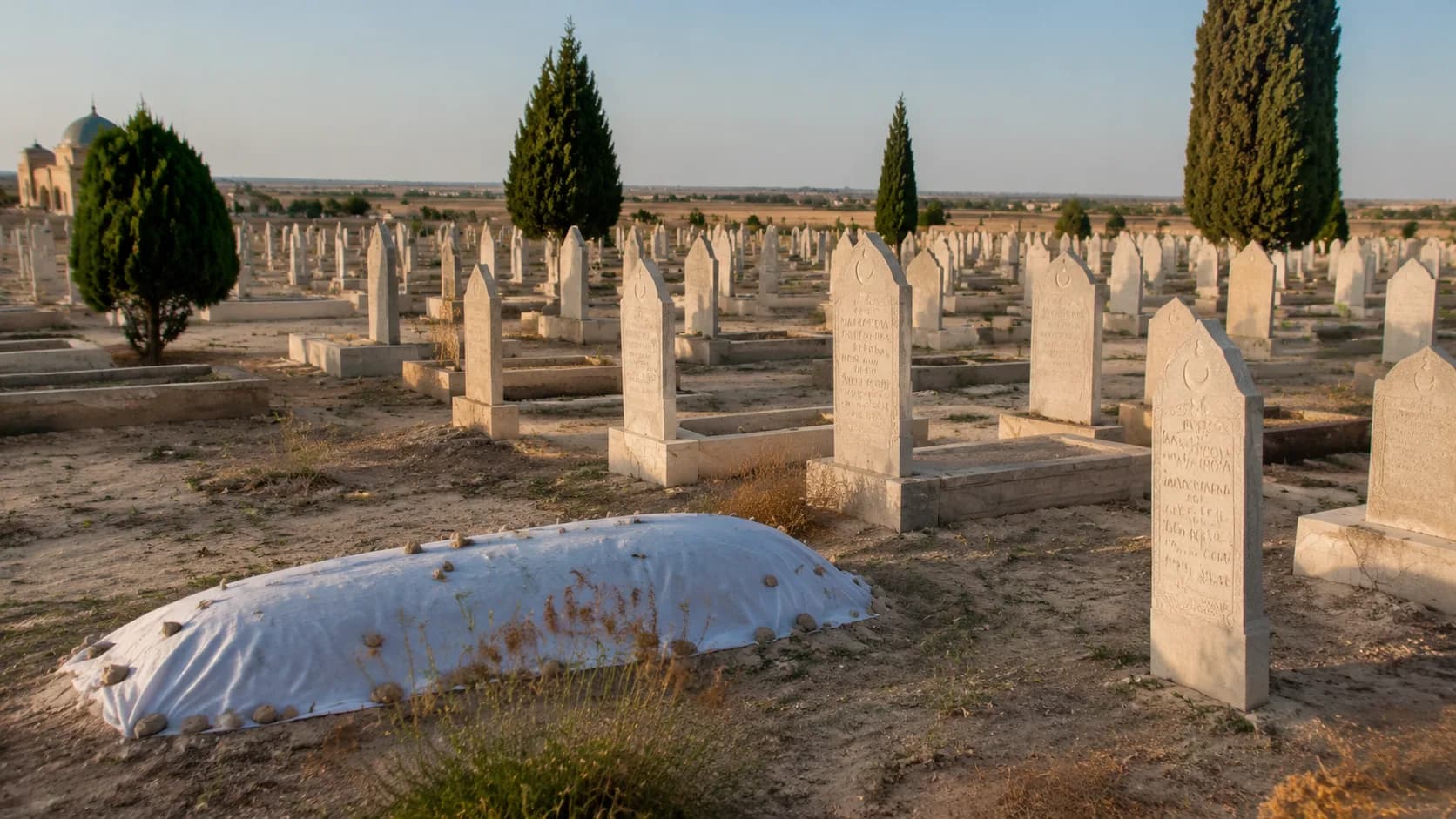
Uzbekistan is predominantly Hanafi Sunni, and most Muslim funeral practice in the country follows this school. For a diaspora family the essential picture is: burial within 24 hours, ehson gatherings on day 7, 20, 40 and the anniversary, and a modest monument set after the 40th day.
Janazah, the prayer for the deceased, is performed at the mosque courtyard or at home. Women traditionally do not attend the cemetery, particularly in rural Uzbekistan. Burial is in a plain grave with the body laid on the right side facing Mecca.
On the 40th day and the anniversary, families host ehson — a memorial meal of plov accompanied by Quran recitation, with men and women in separate rooms. The plov is cooked in a large kazan in the courtyard; neighbours and distant relatives come without gifts, help, and eat together.
What we do on the plot. Care stays modest: regular cleaning, gentle stone wash, simple flower arrangements timed to the dates. We coordinate with the local mullah and the cemetery's groundskeepers, and we keep visits inside the rules each cemetery sets.
Frequently asked questions
Canonically — after the 40th day. In practice, allow 2–3 months from burial when accounting for stonework and installation. At grave.uz, the typical lead time is 4–6 weeks of stone work plus design approval.
Yes. Remote participation — photo and video reports, ordering, payment — is fully expected. The local restrictions concern physical presence on the burial day, not remote care.
In modern practice — no, especially for diaspora families. You can confine the observance to Quran recitation at the grave, a photo/video report, and a sadaqa donation. Many families in the US, Israel and Germany host the marosim plov locally instead.