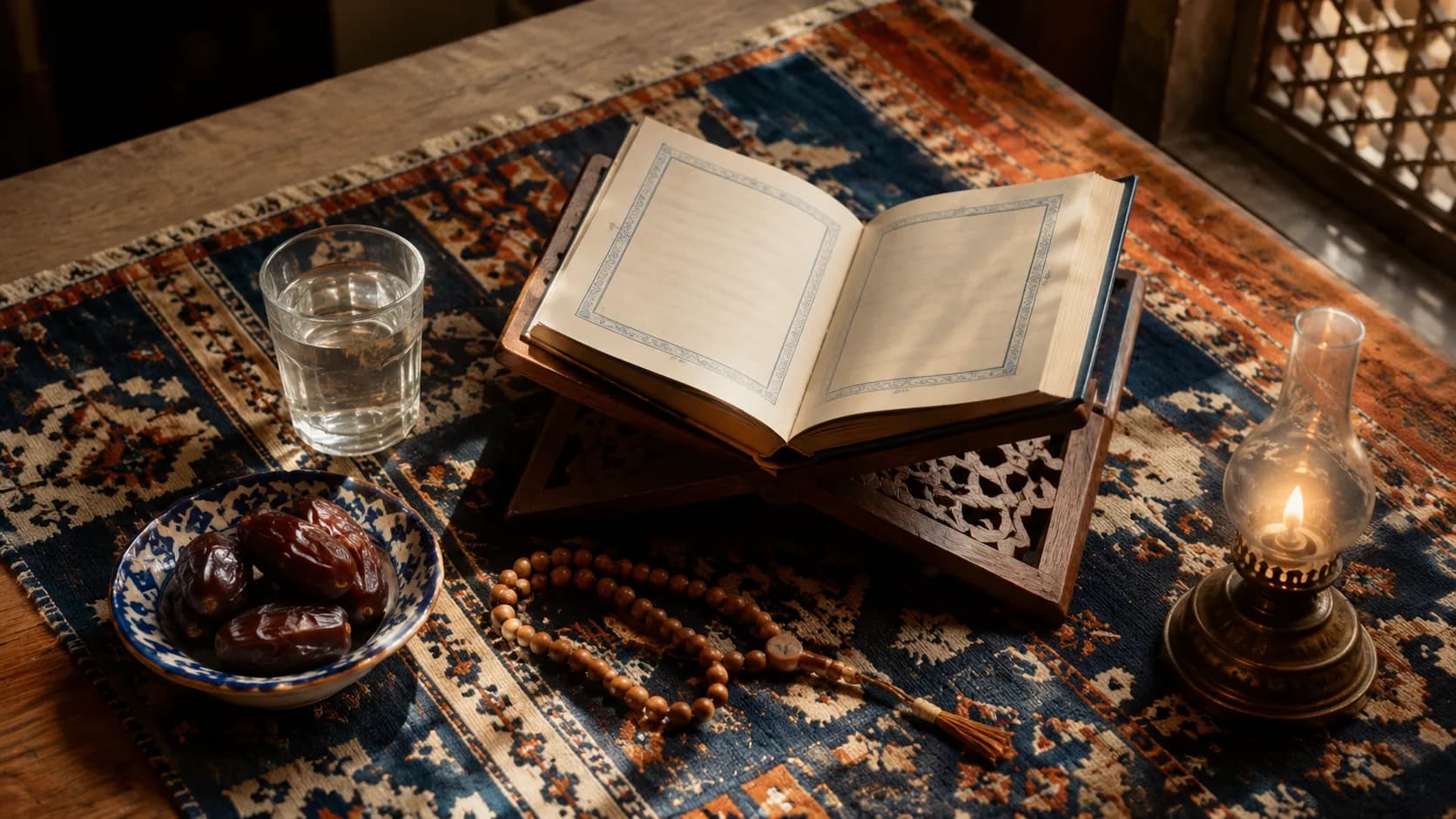
The Uzbek Islamic memorial calendar has a distinct structure shaped by Hanafi-Shafi'i jurisprudence and Central Asian custom. This is the day-by-day guide.
Day 7 (maraka): a small home gathering with Quran recitation, simple food (samsa, tea, fruit). 1–2 hours after prayer.
Day 20 (taziya): less common, especially in Tashkent; observed in Fergana Valley and Khorezm with another small Quran reading.
Day 40 (ehson): the main post-burial gathering. 50–300 guests; large kazan of plov; men and women separately; multiple Quran reciters; 2–4 hours. Active mourning eases after this point.
Anniversary (yil oshganligi): the second major gathering, same format as day 40. Often the monument installation is timed to this date if not done earlier.
Ongoing annual remembrance: smaller gatherings at the grave and at home; Quran recitation during Ramadan for the soul.
Eid al-Fitr and Eid al-Adha: many families visit graves on these holidays; on Eid al-Adha, sacrificial-animal meat is brought to the grave symbolically.
Remote organization. For diaspora families, we coordinate a local oshpaz (plov cook), invite local relatives if requested, arrange Quran reciter, and provide photo/video reports.
On the cemetery side, we tidy the plot, place modest flowers (per Uzbek custom), recite Quran at the grave (with a local mullah, or audio playback if none), and send photo/video reports.
Frequently asked questions
Not canonically — Islam doesn't require a 40th day per se; it's Central Asian custom. A simplified form (Quran recitation + small meal, without a full ehson) is acceptable.