Uzbek national custom and Islam interlock but are not the same. Islam dictates how the dead are buried; Uzbek tradition dictates how they are remembered. For diaspora families, distinguishing the two helps separate what must happen at the cemetery from what is hosted at home.
Sadaqa is the distribution of food, clothing or money to those in need, in the memory of the deceased. Marosim is the memorial gathering — held on day 7, 20, 40 and the anniversary, with Quran recitation and food.
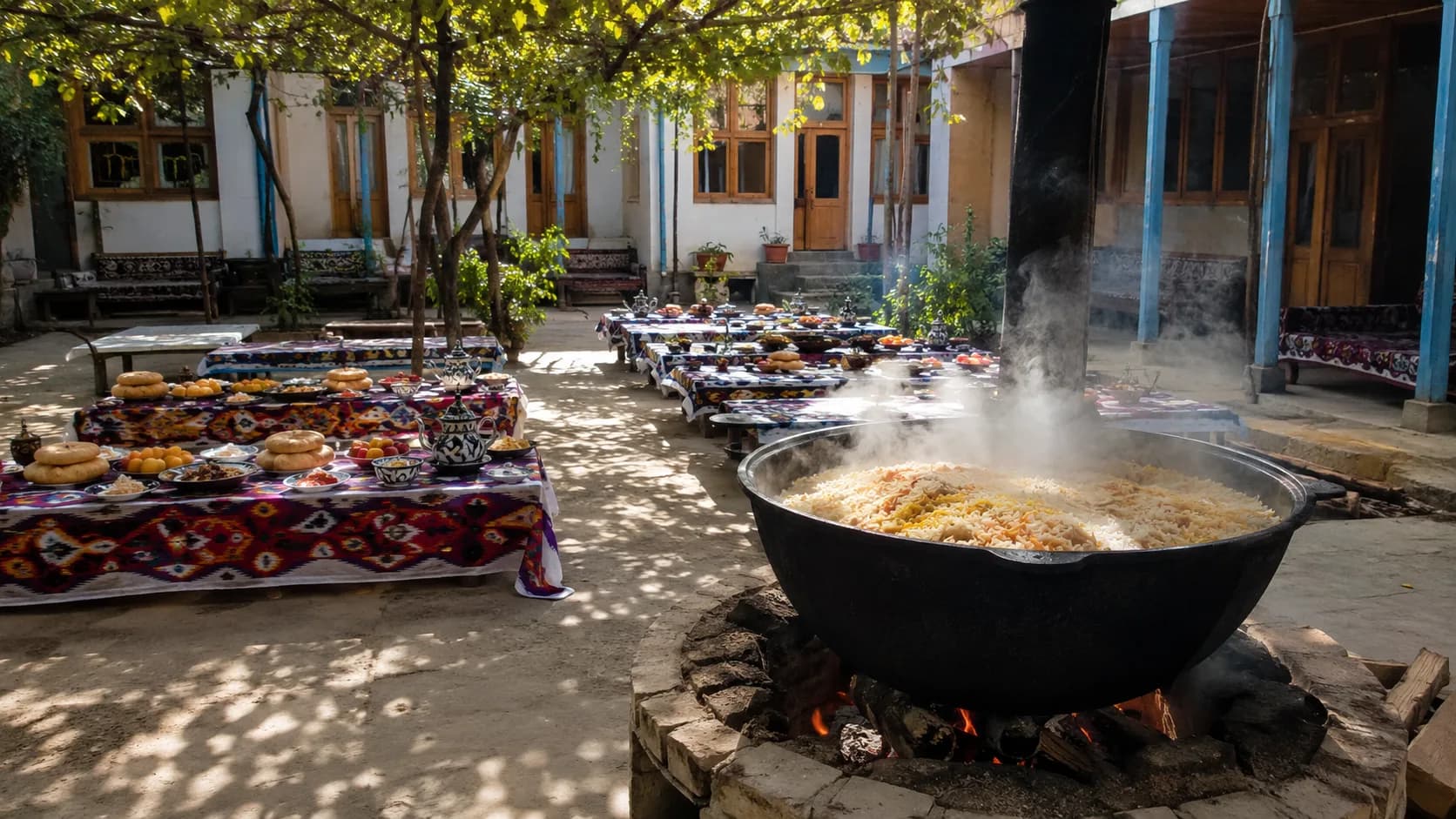
The memorial plov is the central material expression of memory, cooked in a large kazan in the courtyard on day 40 and the anniversary, served to 100–500 guests. Regional variations exist: Fergana, Tashkent, Bukhara, Khorezm all have distinct recipes.
Diaspora families coordinate the at-home gatherings locally (Moscow, NYC, London all have Uzbek caterers) while ordering the cemetery visit and photo report from us. We can also help find an oshpaz (specialist plov cook) for the marosim at the home in Uzbekistan.
Frequently asked questions
No. The common practice is to hire a professional oshpaz. For marosims of 100+ guests, that's the norm. Diaspora families typically order the plov from local Uzbek caterers.
Yes. Sadaqa can be done on its own — by transfer to a local mosque, madrasa or charitable fund. It's a complete and accepted form of memory, especially when a family cannot host a large gathering.