Koryo-saram are ethnic Koreans in the former USSR, displaced from the Russian Far East to Central Asia in the 1937 deportation. Around 170,000 live in Uzbekistan today — one of the largest diasporas in the country. Their mourning practice is a synthesis of Korean, Buddhist and Russian Orthodox contexts.
Burial on day 3, with a home farewell («pong») the day before — open casket, white flowers. The 49-day Buddhist cycle (7 stages of 7 days) culminates in a service at a Buddhist temple or at home.
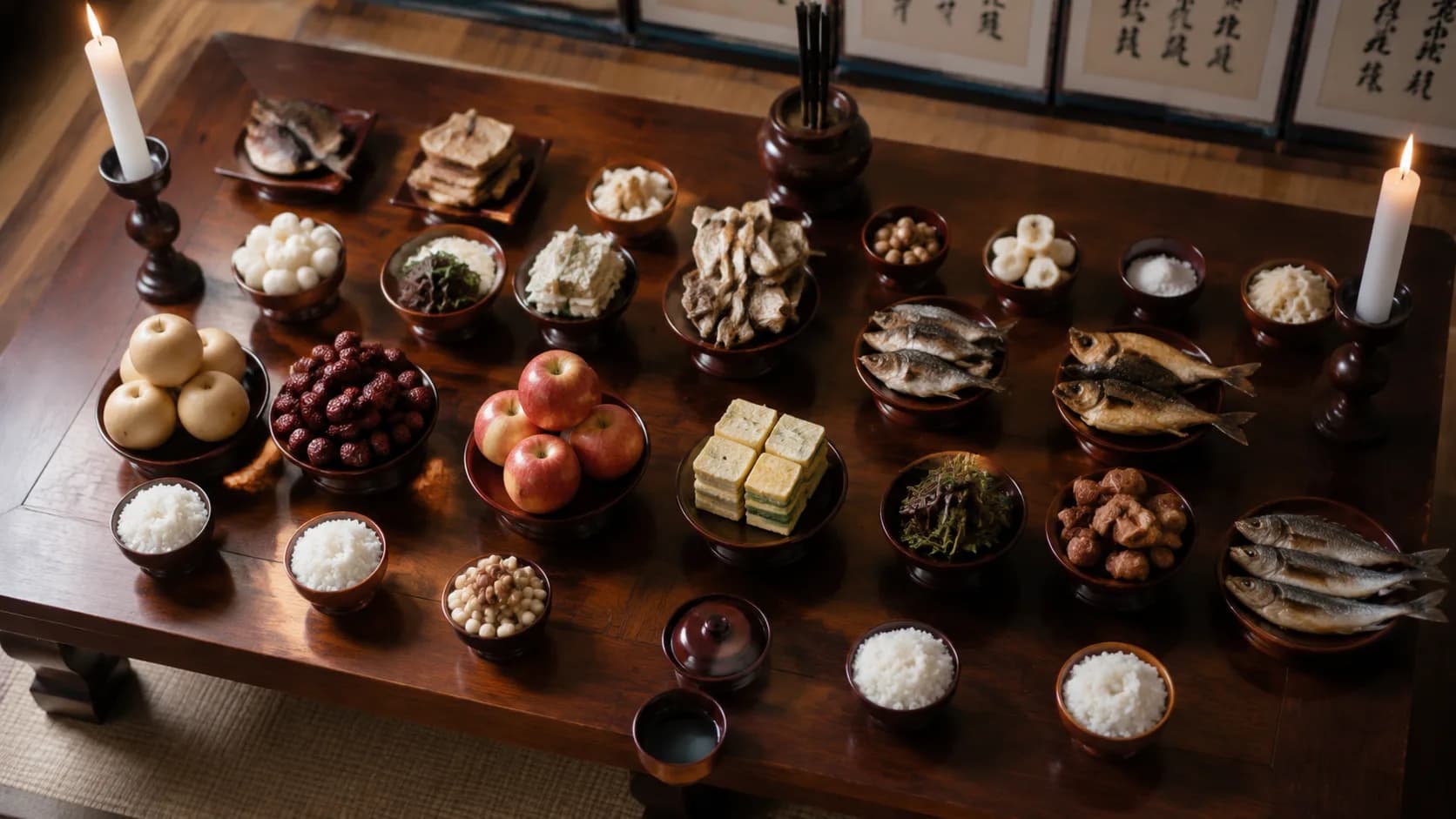
Chesa is the ancestral rites table — rice in centre, fruits and fish on the sides, tea and alcohol at the near edge, with prescribed bowing. The death anniversary is the central recurring date.
Modern Uzbek Koryo-saram practice has mixed with Russian Orthodox: many families observe both day 40 and day 49. We sync visits to those dates and to Han-sik (the spring ancestral remembrance), and bring white chrysanthemums.
Frequently asked questions
Families decide. Where the Korean tradition is intact, day 49. Where assimilation has gone further, day 40. Many observe both, and we will schedule a visit to either or both.
The full ritual — no, it requires physical presence at the table and bowing. But we can place ceremonial items (fruit, rice, fish) on the grave and run a photo/video feed so the family can watch.