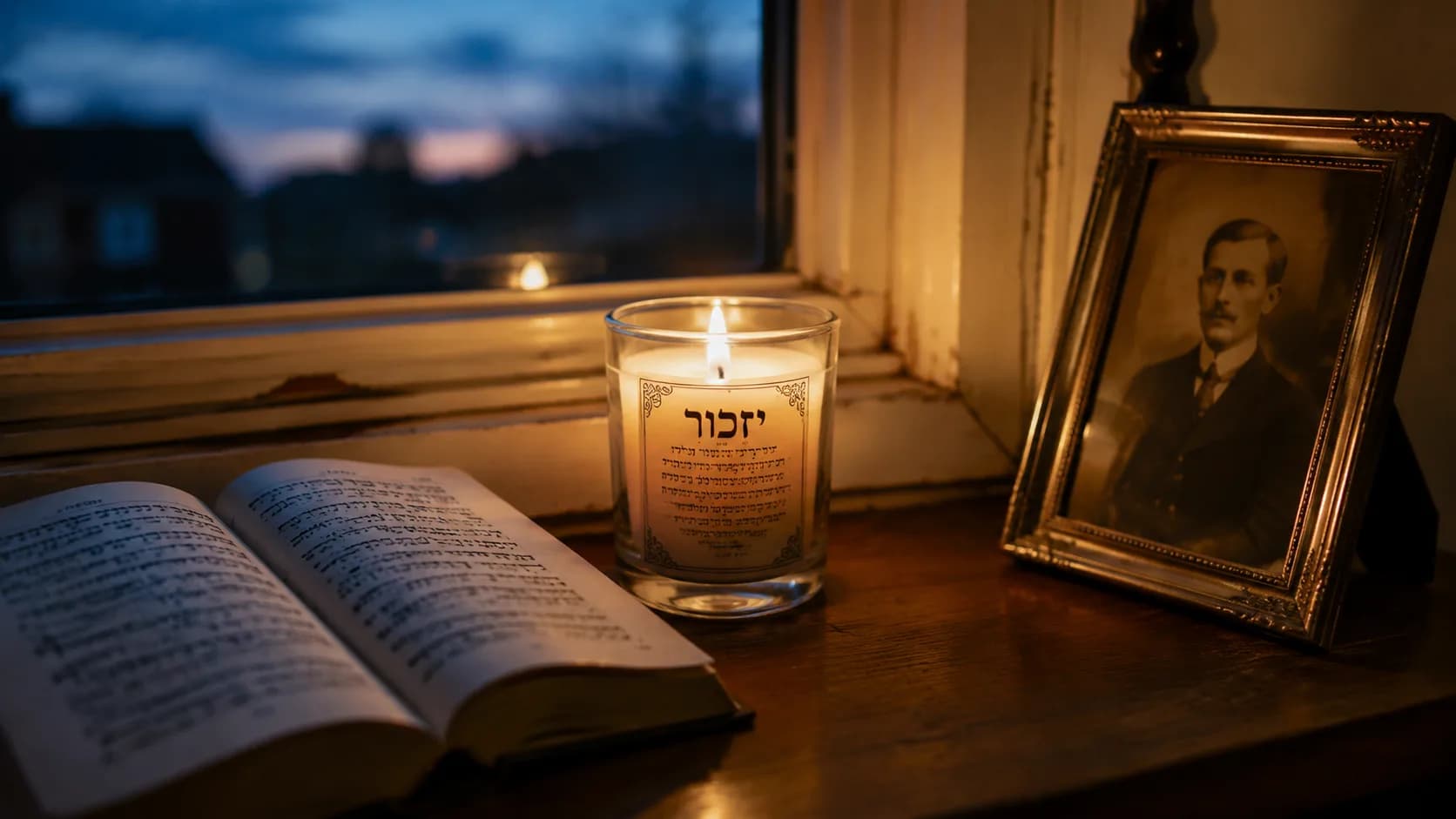
Yahrzeit, the Hebrew-calendar anniversary of a parent's or grandparent's death, is the most important recurring obligation a diaspora Jewish family carries for an ancestor buried in Uzbekistan. The Hebrew date shifts on the civil calendar each year — sometimes a month early, sometimes a month later — and synchronizing the family's home observance with the cemetery visit in Uzbekistan takes some planning.
What the family does at home. The 24‑hour yahrzeit candle is lit at sunset on the eve of the Hebrew date. Many families read selected Psalms (Tehillim) at home, light a memorial candle on the kitchen counter, and avoid celebrations during the day. Men recite Kaddish at synagogue at the morning service.
What we do in Uzbekistan in parallel. On the morning of the Hebrew date — synchronized to the time zone of the cemetery, not the family's — a representative visits the grave, places a small smooth stone on the matzevah, reads selected Tehillim aloud (commonly Psalm 16 and Psalm 73 in the Bukharian custom), takes 8–12 photos and 30–60 seconds of video, and sends the report back to the family within an hour of the visit.
How we get the Hebrew date right. When you sign up, you give us the deceased's Hebrew date of death (e.g., 14 Adar 5778). Our system tracks the rolling Hebrew calendar and auto‑schedules the visit 3–5 days in advance plus on the exact date. You see the next 5 years of yahrzeit visits in your cabinet.
What you receive. A short text summary in English/Hebrew/Russian (your preference); 8–12 photos with EXIF metadata; a 30–60 second video clip including audio of the Tehillim reading; the GPS location and what3words code; the time the visit happened in both Tashkent and your local time. All in your personal cabinet.
Kaddish at the grave. By long-standing Sephardic and Bukharian tradition, Kaddish is recited at synagogue, not at the cemetery, in the presence of a minyan. We do not arrange a minyan at the grave on yahrzeit (that's reserved for special occasions like the unveiling) but we do read Tehillim and Kel Maleh Rachamim, which are the appropriate cemetery prayers.
Frequently asked questions
Cemetery visits do not take place on Shabbat. We move the visit to the morning of the following Sunday (or Friday morning of the prior day, depending on family preference), and we communicate this clearly in your cabinet ahead of time.