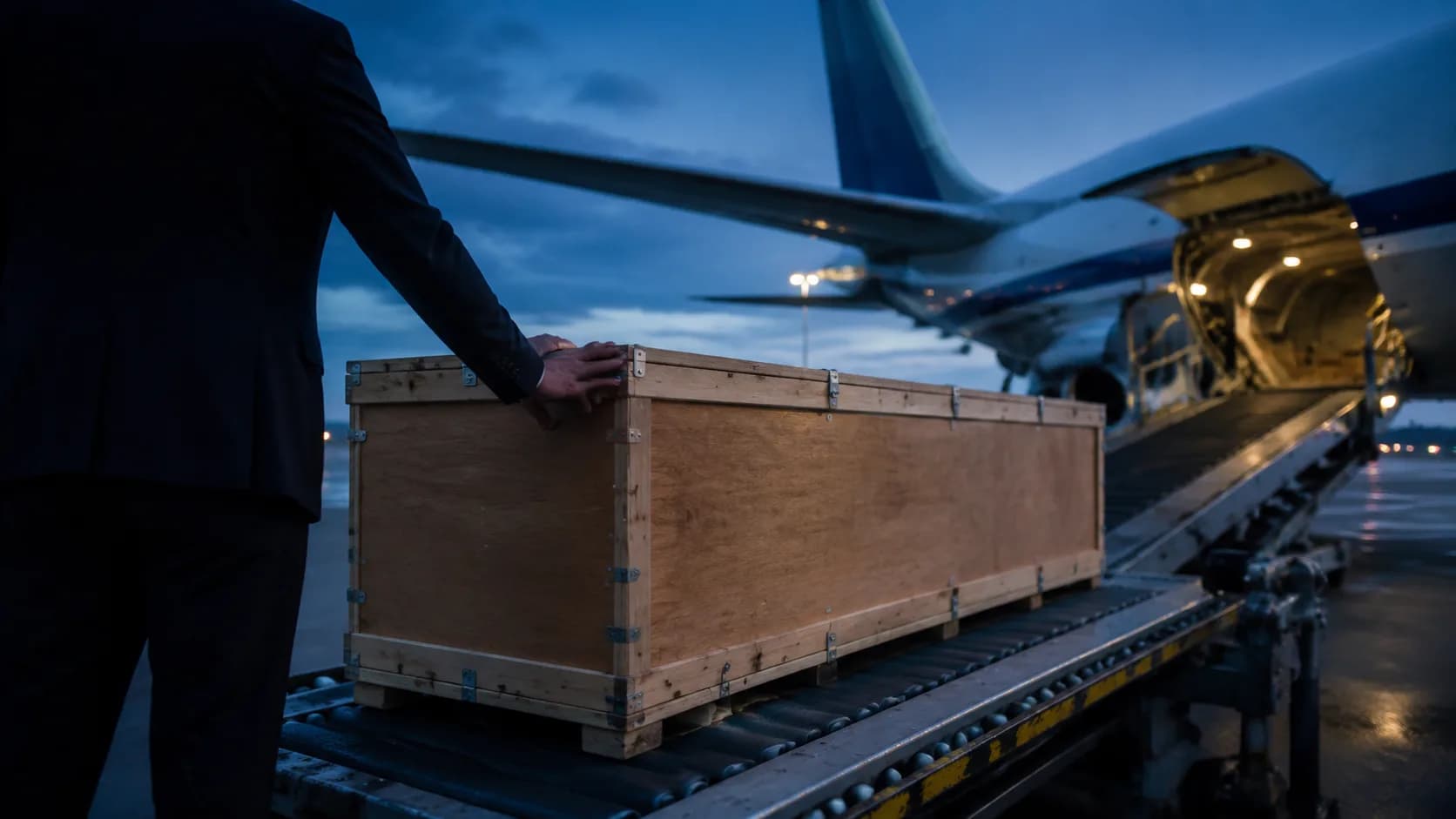
The zinc-lined coffin is a technical standard for air transport of human remains, not tradition. No major airline carries remains without one. This article covers the build, the standards, and the escort role.
Build. Three layers: inner zinc hermetic capsule (zinc because it doesn't corrode and seals reliably), middle wooden coffin (the capsule sits inside), outer wooden transport crate (for tying down in the cargo deck). Total 200–300 kg.
IATA requirement. The capsule must be SEALED (welded, not screwed), making it impossible to open without destruction — a government anti-substitution rule. The transport crate must be marked «Human Remains» in three languages on flights from Uzbekistan.
Embalming alongside. The capsule is hermetic but embalming is still required because transport can take up to 3 days with connections. Combined zinc + embalming is the gold standard.
Cost: $400–800 in Uzbekistan. Three tiers: standard $400, premium $550 (better wood finish), lux $800 (carving + brass).
Escort: a person who physically travels on the same flight and is received in the destination airport. Most carriers allow it (Aeroflot, Lufthansa, Turkish, El Al). The escort can be a family member or a funeral-service rep.
What the escort does: verifies proper cargo-deck placement (IATA permits escort presence during loading); meets the receiving funeral home; helps with local paperwork; accompanies to burial. Reduces handoff errors significantly.
Escort cost: economy ticket $300–1500 plus our coordination $300–800 = $600–2300 total. Many families send a close relative who'd travel anyway; our coordination then just reduces in-transit risk.
Frequently asked questions
Only by ground transport between adjacent CIS countries with special permission. All international air transport — zinc only.
Not mandatory. But recommended for long corridors (US, Canada) with two connections — reduces handoff errors.