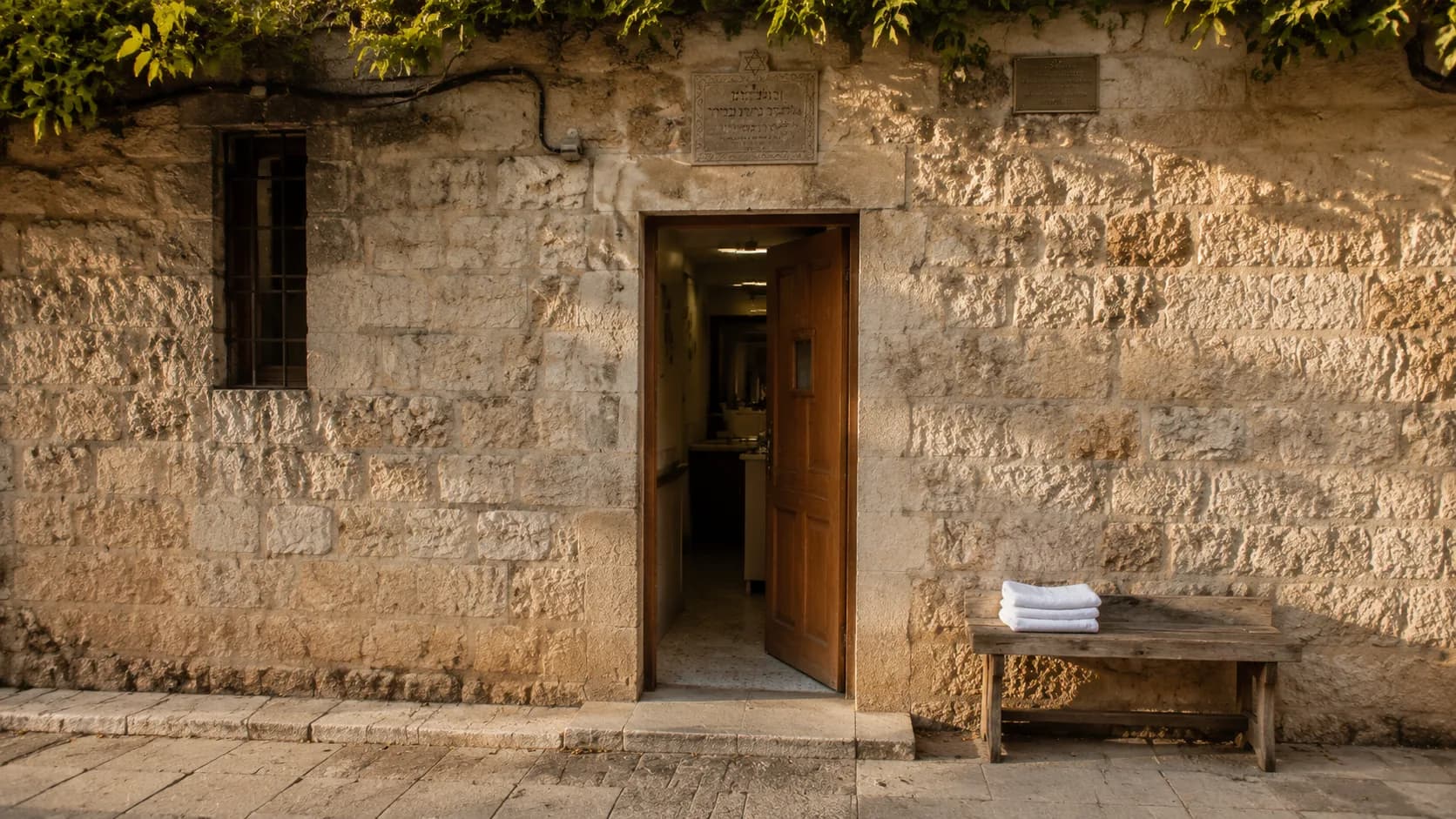
Tahara — the ritual washing and dressing of the deceased by the Chevra Kadisha — is a foundational halakhic requirement before burial. In Uzbekistan, the Tashkent, Bukhara and Samarkand Jewish communities each maintain a Chevra Kadisha; these organizations operate quietly but are an essential resource when a Jewish family loses a loved one in Uzbekistan or needs taharah coordinated before repatriation.
Three Chevra Kadishas. The Tashkent Chevra Kadisha works out of a small facility near the Textile cemetery; the Bukhara Chevra Kadisha is at the Old Bukhara Jewish Cemetery gatehouse; Samarkand operates from a building near the Old Jewish Cemetery. All three are staffed by volunteers — Jewish men perform tahara for male deceased, Jewish women for female deceased.
What tahara involves. The body is washed with warm water in a specific order (head first, descending to feet), purified with a final pouring of approximately 24 quarts of water (the «9 kavin» measure), dressed in plain white linen burial garments (tachrichim), and placed in a simple unfinished wooden coffin. The whole process takes 90 minutes to 2 hours and is performed in respectful silence with brief prayers.
Coordination with repatriation. The critical halakhic question for diaspora families: should tahara happen in Uzbekistan before embalming and transport, or in the destination country (Israel, US) on arrival? The Bukharian strong preference is in Uzbekistan, before embalming, because embalming alters the body in ways that make full halakhic tahara impossible afterward.
Our role. When a Jewish family contacts us about a repatriation case, we coordinate the timing: tahara first (typically same day or next day after death), then embalming (immediately after tahara), then documents and transport. The full sequence runs 4-7 days in Uzbekistan before the cargo flight departs.
Cost. Tahara itself is performed without fee by the Chevra Kadisha (a sacred volunteer obligation, hesed shel emet). A donation to the community is customary, $200-500. Tachrichim (burial garments) and the unfinished wooden coffin are paid: $300-600 in Uzbekistan.
What we do NOT do. We don't perform tahara ourselves — that's exclusively the Chevra Kadisha's role. We coordinate the schedule, transport the body to and from the tahara facility, and handle all the surrounding logistics. The Chevra Kadisha keeps its work confidential per halakhic norms.