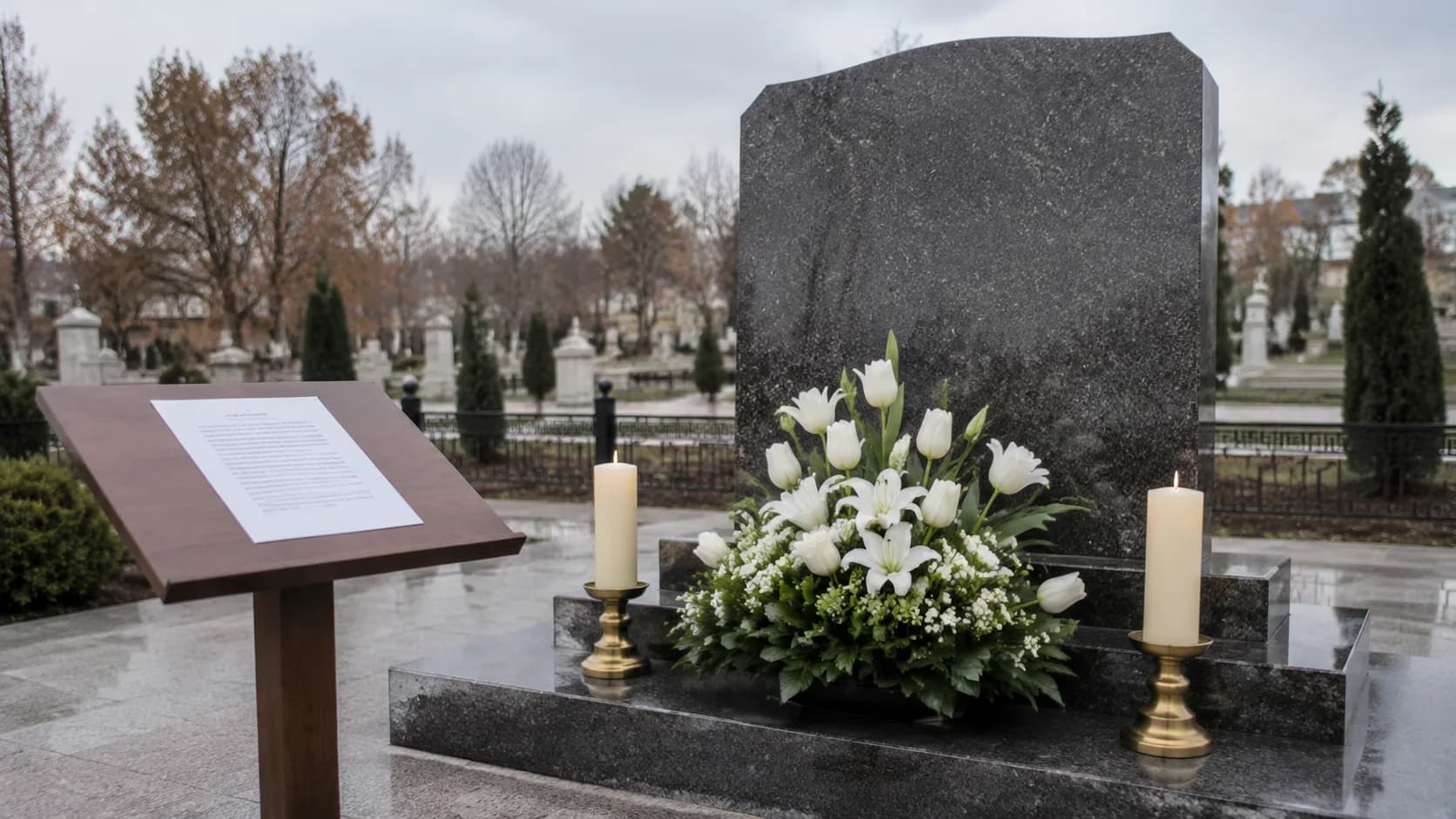
Secular ceremonies are increasingly chosen in Uzbekistan, especially in Tashkent and among families with diffuse religious identity. The form has dignity, structure and memory of the person through their deeds — without religious prayers or clergy.
Structure: an MC's welcome (usually a close relative or friend), 2–3 eulogies, the deceased's favourite music, a minute of silence, flowers, farewell. Length 45–60 minutes. Venue: a memorial hall or the family home.
Eulogies should avoid clichés — speak in specifics: a journey, a joke, a craft, an attitude towards work or children. Music: the deceased's favourite tracks, 1–2 pieces of 3–5 minutes each.
Monument: a simple granite stone with name, dates and a line or two of epitaph; bronze letters or a laser portrait optional, no religious symbols. Care of the grave is by family-chosen dates rather than a religious calendar — typically 4–6 visits a year.
Frequently asked questions
In memorial halls at city cemeteries (Tashkent has several), at the Tashkent crematorium, or at home. Most cemeteries accept secular ceremonies without question.
Yes. Many Uzbek families hold a secular farewell with eulogies and music, then host plov on day 40 as a form of family memory rather than religious ritual. This is fully accepted.