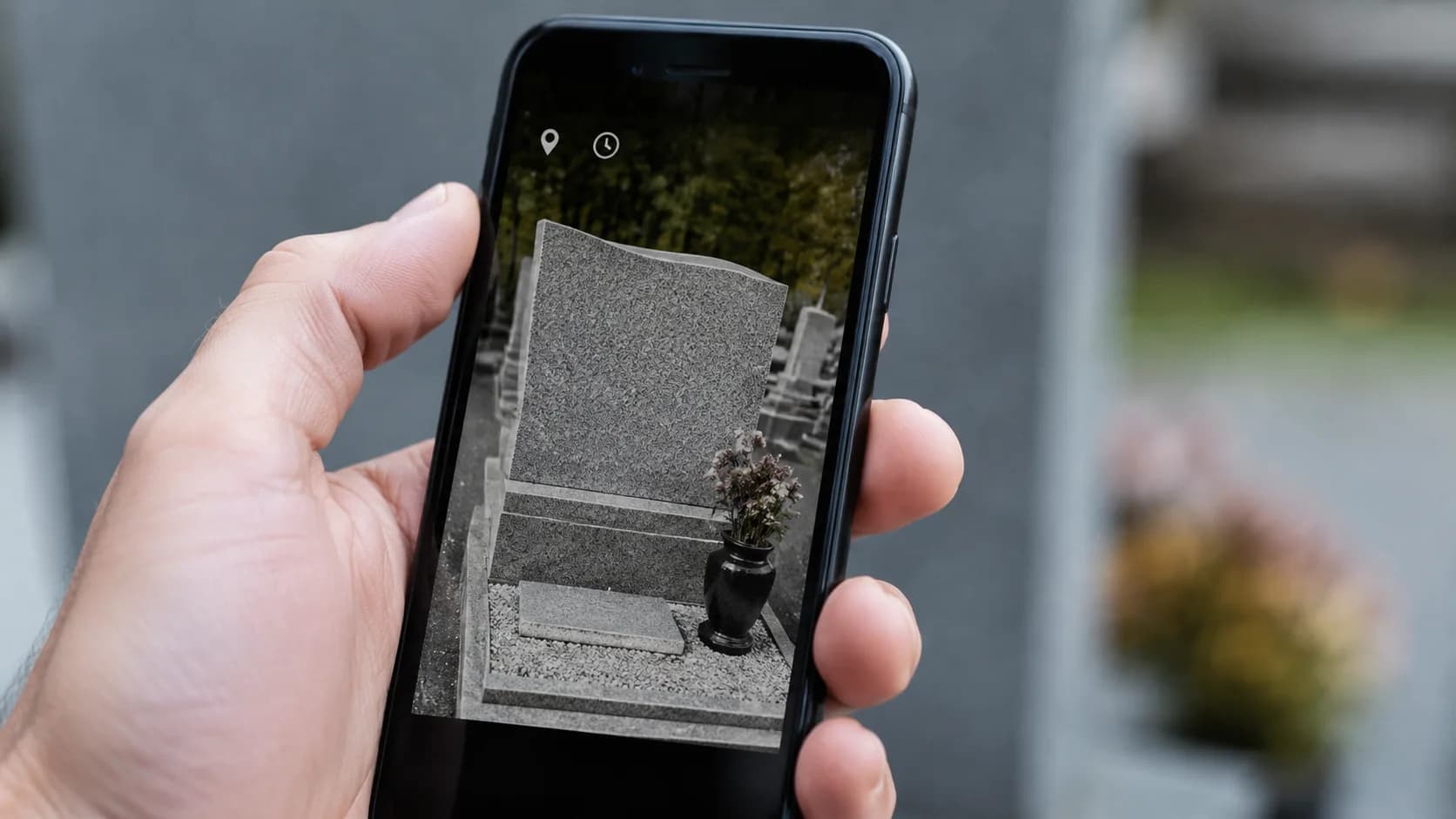
When you pay for grave care from abroad, the main question is whether the work actually happened. The photo report is the trust mechanism. This article is about reading it critically.
Minimum for an honest photo report:
1. EXIF metadata — date/time + GPS coordinates baked into the file. Verify via macOS Cmd+I, Windows Properties → Details, or online tools. Good contractors don't strip EXIF.
2. Geotag in the cemetery — paste coordinates into Google Maps; the dot must land on the cemetery.
3. Date matches schedule. Photos that arrive a day after the planned visit are normal; photos with EXIF from a month earlier are forgery.
4. Neighbouring graves in frame — context matters; close-ups alone are weak proof.
5. Multiple angles — 3–8 photos.
6. Seasonal markers — winter trees in summer is a red flag.
Forgery signs: stripped EXIF, identical EXIF across all photos, GPS not in cemetery, inconsistent shadows.
What to do with doubt: order a video confirmation, ask for a dated-newspaper marker, ask a local Uzbek contact to independently verify.
All grave.uz photos retain intact EXIF and geotag. We don't work with sub-contractors who strip it.
Frequently asked questions
WhatsApp and Telegram strip metadata when compressing. Request the original via email or a file-share link (Google Drive / Dropbox). The grave.uz cabinet keeps the original intact.
Video is the strongest proof but more expensive. Standard: photos every visit, video quarterly or for memorial dates. Full-video tier is a separate package.