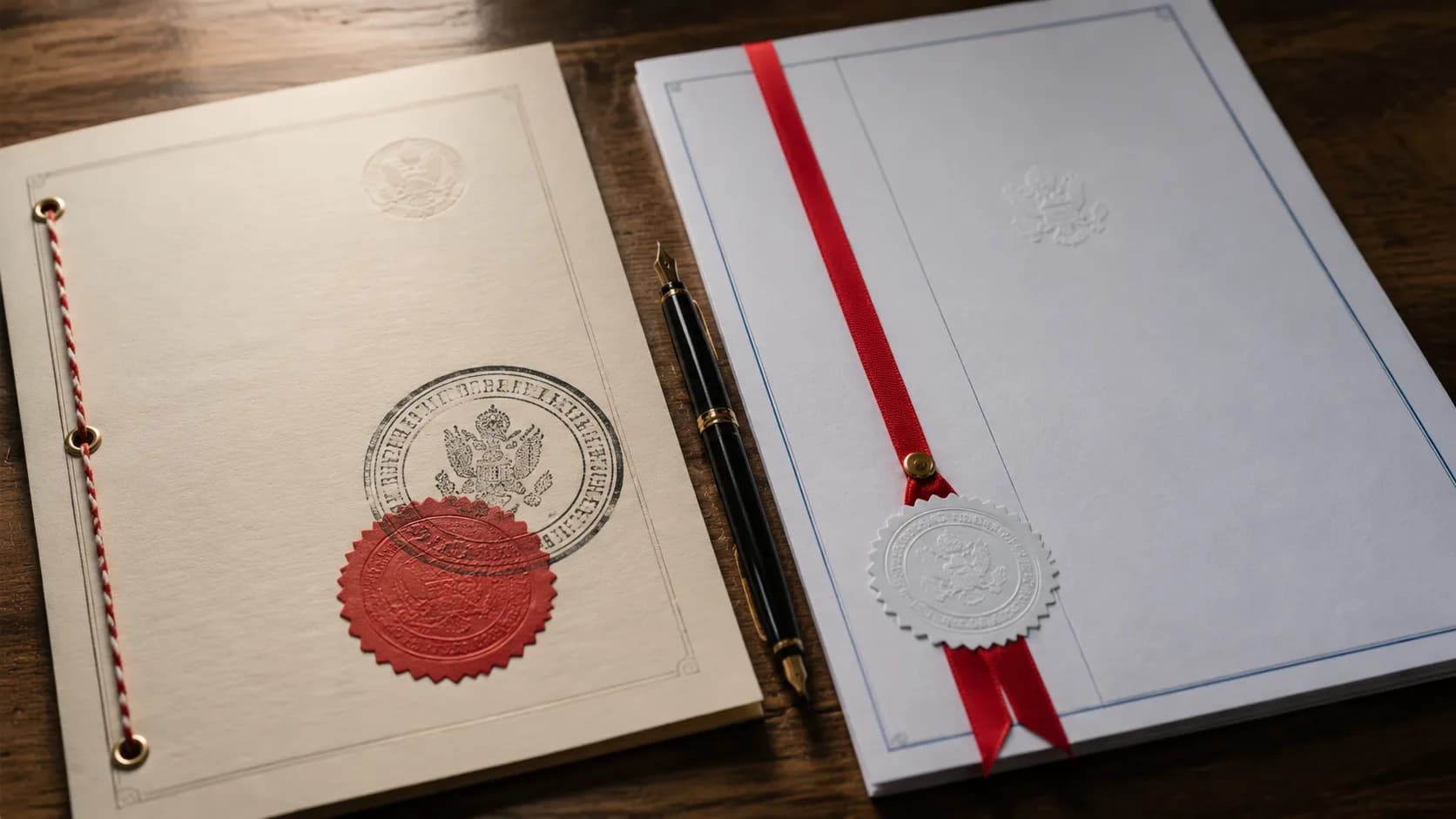
Notarization and apostille are different mechanisms, even though they look similar. Notarization confirms that a specific person signed a document or that a document is an authentic copy. Apostille confirms that an OFFICIAL DOCUMENT (issued by a state body) is what it claims to be — issued by a real Uzbek state authority. Both can be on the same document; neither replaces the other.
When notarization is enough. A POA from you to a relative for routine actions. A signed agreement between you and a service provider. A certified copy of your identity document, when an office asks for one. All these confirm WHO signed; the authority of WHAT they're agreeing to doesn't need state confirmation.
When apostille is needed. Documents issued by Uzbek state bodies for use abroad: death certificate (ZAGS), birth certificate, marriage certificate, divorce decree, court rulings, school diplomas, university transcripts. These are STATE-ISSUED documents; the apostille confirms the issuing authority is real.
When both are needed. A notarized POA from you in your country, plus its certified translation into Russian — apostille on the translation (if the receiving country requires apostille on translated documents). A document signed in your country needs notarization (or your country's apostille); a document issued by Uzbek state needs Uzbek apostille.
When neither is needed. Internal Uzbek transactions between Uzbek residents that don't cross borders. Personal correspondence and informal documents. Routine business contracts between two Uzbek entities.
Two-side chain example. You in New York send a notarized POA (with a US apostille) to your representative in Uzbekistan; they use it at the Uzbek ZAGS to collect a death certificate, which then gets an Uzbek apostille and a certified English translation. Total chain: 2 apostilles + 1 notarization + 1 translation. We handle this regularly. Germany is different: an Uzbek apostille is not valid there — see our German guide.
Cost rough estimates. Notarization: $20–80 per document depending on country. Apostille from your country: $20–100. Translation: $20–60 per page. Apostille in Uzbekistan: $30–80. Full chain for a typical case: $200–400.
Frequently asked questions
Typically no for state-issued documents. The apostille confirms the issuing authority. Notarization adds nothing for state documents.
Read next in this cluster
- Uzbek death certificate: where and how to obtain oneComplete guide to obtaining a death certificate in Uzbekistan: ZAGS office, applicant documents, timelines, fees, considerations for families abroad.
- Apostille on the Uzbek death certificate for use abroadApostille on an Uzbek death certificate: online via my.gov.uz, fee, timeline, where it is recognised — and why not in Germany, Austria or Greece.
- Uzbek documents in Germany: no apostille, what nowAn Uzbek apostille is not valid in Germany. How the German embassy in Tashkent verifies documents, what it costs and what German authorities need.
Need help or a detailed estimate?
We're available 24/7. Leave a request — we'll call back and clarify.