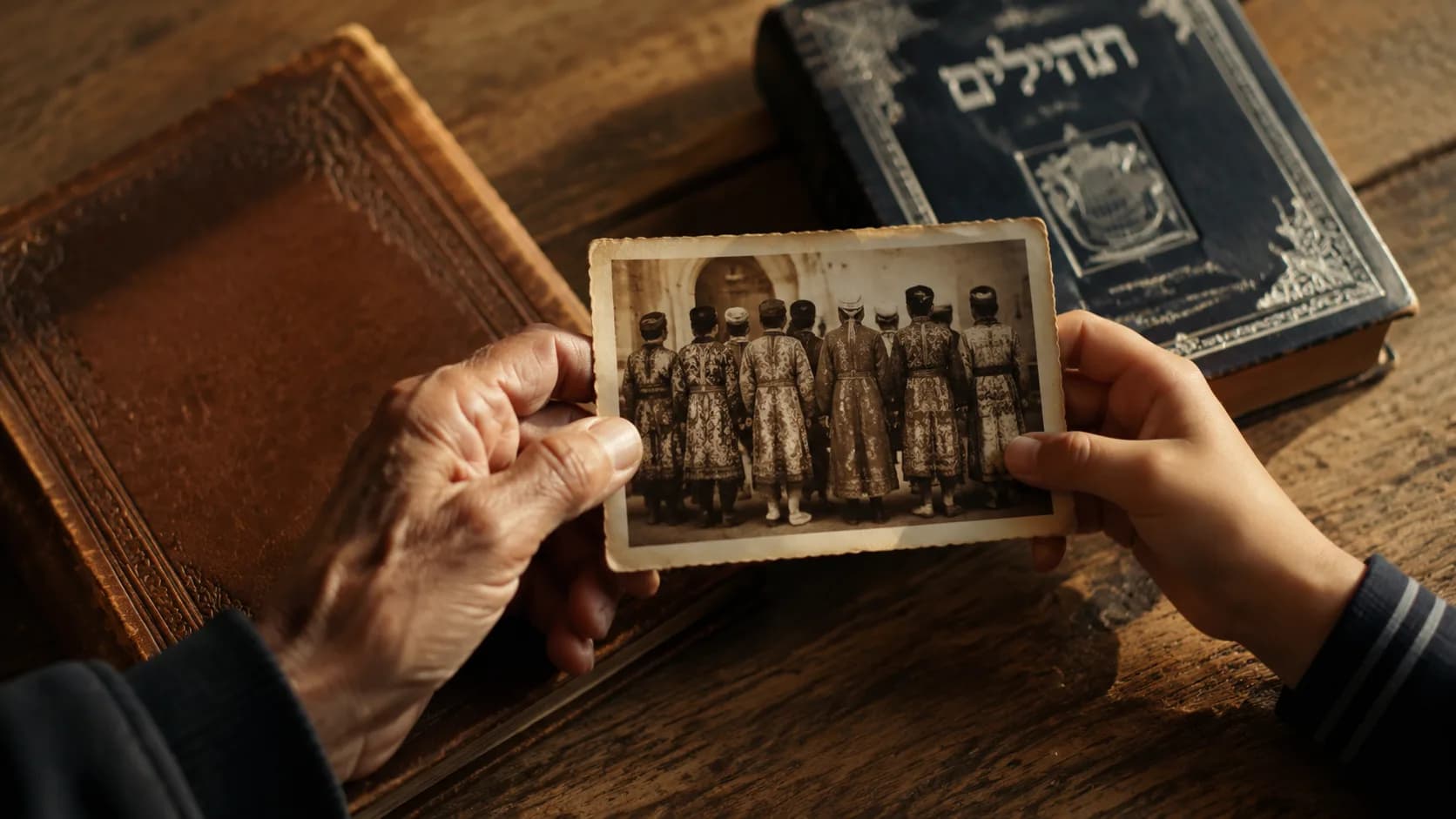
The Bukharian Jewish community is one of the oldest in the world — 2 500 years in Central Asia. But physically nearly all of it emigrated in the last 30–40 years; fewer than 100 remain in Bukhara, even fewer in Samarkand. Which means responsibility for memory rests on the diaspora in Queens, Israel and Vienna. Passing this memory to children and grandchildren is the current parent generation's central task.
Why it's hard. Children and grandchildren in Queens or Tel Aviv often speak the parental Bukhori dialect less than their parents; know less of Uzbek geography; have never been to family graves. Distance is more than kilometres — it's language and culture layers.
Step 1: record what the elders know. Video or audio — Bukhori, Hebrew, Russian, English, whichever language they tell stories in. Names, dates, relations. Do it while there are still elders to ask. Many families wait, then it's too late.
Step 2: family tree. Build at least 4–5 generations back (to great-grandparents). Use free tools — JewishGen has a dedicated Bukharian Jews section; FamilySearch and Geni are useful.
Step 3: photographic archive. Scan old photos in high resolution. Annotate: who, where, when. Store in cloud with access for multiple family members.
Step 4: graveside visit. If possible, a child or grandchild's trip to family graves in Bukhara or Samarkand is the strongest memory anchor. Emotional ritual; many families schedule it before a Bar Mitzvah.
Step 5: regular Yahrzeit ritual. Lighting the candle at home + receiving the photo from our service in Bukhara becomes a family ritual. Children involved from age 5–10 inherit it as their own by 20.
Step 6: financial responsibility for the next generation. By 18 the child can partly cover the grave-care payment — symbolic and educational. Queens-income families often pass $50/month to teens for this — financial literacy plus connection to ancestors.
What not to do. Don't make memory a heavy obligation. Make it part of the family rhythm, not a sad burden. Explain to children it's a connection, not guilt.
Frequently asked questions
Around 12–14 (before Bar Mitzvah). Younger means weaker emotional bond; older sometimes means lost interest. Individualized by readiness.